I Finally got around to posting my 10 minute Kettlebell workout. Most of those that train with me will know this is an absolute favourite of mine
How to Build Resilience: Key Factors for Strength and Growth
Today, I had an insightful conversation with a client about a sudden, unwelcome change I’m currently facing. The client was incredibly empathetic, expressing genuine concern for my situation and how difficult it must be. While I was deeply appreciative of their compassion, I realized that, surprisingly, I wasn’t feeling weighed down by the change at all.
As a small business owner, a survivor of a mid-life crisis, and someone who has relocated and adapted to new countries multiple times, I’ve gradually built up my resilience. This hasn’t always been the case—stress and negativity were often my default responses to change in the past. Reflecting on this conversation, I started to wonder how I’d developed this resilience. So, I did a bit of research and found some interesting insights that matched my personal experiences. And, of course, I thought: why not share what I’ve learned in a new blog post!
Resilience is our ability to bounce back from setbacks, adapt to change, and keep moving forward, even in challenging times. It’s not about avoiding difficulties but learning how to manage them in a way that helps us grow. Whether it’s a personal setback, career obstacle, or difficult life event, resilience can make all the difference in how we cope and thrive. Here are seven key factors that can help you build resilience and navigate life’s ups and downs with greater strength and confidence.
1. Acceptance: Embracing What You Can’t Change
Acceptance is the foundation of resilience. Life is full of situations we can’t control, and sometimes, the best thing we can do is acknowledge them. Instead of resisting or denying reality, accepting it helps us conserve our energy and focus on what we can change. Acceptance doesn’t mean giving up; it simply means facing the truth of a situation and adapting.
How to practice acceptance: Start by acknowledging your feelings without judgment. If you’re facing a setback, try to understand what’s within your control and what isn’t. This shift can help you feel more grounded and reduce feelings of frustration or helplessness.
2. Optimism: Seeing Challenges as Opportunities for Growth
Optimism doesn’t mean ignoring difficulties; it means believing that challenges can lead to growth. When you approach difficult situations with optimism, you open yourself up to learning and self-improvement. Resilient people see obstacles not as dead ends but as opportunities to develop new skills, gain perspective, and grow stronger.
How to cultivate optimism: Try to reframe challenges as learning opportunities. When something goes wrong, ask yourself, “What can I learn from this?” or “How can this experience help me in the future?” Practicing gratitude is another way to shift toward an optimistic mindset, as it helps you focus on what’s going well, even in tough times.
3. Stop Being a Victim: Take Charge of Your Life
When we adopt a victim mentality, we give away our power to circumstances or other people. Resilient individuals take ownership of their experiences, focusing on how they can respond rather than on what’s happened to them. Taking charge of your life, even in small ways, fosters a sense of empowerment and self-worth.
How to stop feeling like a victim: Start by recognizing situations where you feel powerless. Challenge yourself to take action, no matter how small, to shift your perspective from passive to proactive. Even small acts, like setting boundaries or creating a daily routine, can help you feel more in control and reinforce your resilience.
4. Solution-Oriented Approach: Focus on Finding Solutions, Not Problems
Being resilient means looking for solutions instead of dwelling on problems. While it’s natural to feel discouraged when faced with challenges, a solution-oriented mindset empowers you to move forward. Rather than focusing on obstacles, resilient people look for ways to overcome them.
How to be solution-oriented: When faced with a problem, take a step back and brainstorm possible solutions. Break down the problem into smaller parts and tackle one step at a time. Remind yourself that every problem has a potential solution, and you have the ability to find it.
5. Take Responsibility: Own Your Actions and Choices
Resilience requires taking responsibility for our actions, choices, and responses to life’s challenges. When we own our part in situations, we gain a sense of agency and control, which is essential for resilience. Taking responsibility doesn’t mean blaming yourself for everything—it means acknowledging your role in shaping your life.
How to practice responsibility: Reflect on past experiences and consider how your actions and choices impacted the outcome. When facing a new challenge, ask yourself, “What can I do to influence the situation?” This mindset shift can help you feel more empowered and less like a passive bystander in your own life.
6. Social Networks: Lean on Supportive Relationships
Resilient people recognize the importance of social support. Building a network of friends, family, and mentors who encourage and support you can make a significant difference when facing tough times. Social networks provide a source of strength, perspective, and encouragement, helping you stay grounded and resilient.
How to build and maintain a strong support network: Reach out to people who uplift and support you. Be open to asking for help when needed, and don’t hesitate to share your experiences with trusted friends or family members. Additionally, remember to nurture these relationships by being there for others as well, creating a reciprocal network of support.
7. Future Planning: Set Goals and Visualize a Positive Outcome
Planning for the future and setting goals can help you stay focused and motivated. When you have a vision for your future, you’re more likely to persevere through setbacks and stay committed to your path. Having something to work toward gives you purpose, which is a key component of resilience.
How to practice future planning: Set realistic goals, both short-term and long-term, and break them down into manageable steps. Visualize yourself achieving these goals, and remind yourself of the positive outcomes that await you. This future-focused mindset can provide motivation during challenging times, helping you stay resilient and committed.
Building Resilience: Putting It All Together
Resilience isn’t a trait you’re born with—it’s a skill you can develop with practice. By embracing acceptance, cultivating optimism, taking responsibility, focusing on solutions, leaning on social networks, and planning for the future, you’re actively building your ability to navigate life’s ups and downs. Resilience doesn’t mean avoiding pain or struggle, but rather learning to respond to it in ways that promote growth, strength, and fulfillment.
So, the next time you face a setback, remember these tools. Use them to shift your perspective, empower yourself, and keep moving forward. Building resilience takes time and effort, but the rewards—better mental health, stronger relationships, and a more fulfilling life—are well worth it.
How to Improve Your Sleep for Better Health, Weight Loss, and Performance
Sleep is one of the most powerful tools for enhancing your health, but it’s often overlooked in favor of diet and exercise. Good sleep isn’t just about feeling rested; it has profound effects on your body and mind, influencing everything from weight management to physical performance and mental clarity. If you’ve been wondering how to improve your sleep quality, let’s break down the essentials, explore the benefits, and cover simple, effective habits you can start tonight.
The Benefits of Good Sleep
Sleep affects nearly every system in the body. Here’s how quality sleep can improve various aspects of your health:
- Weight Loss and Metabolism: Poor sleep disrupts hormones like leptin and ghrelin, which control hunger and satiety. This can lead to cravings, overeating, and weight gain. Quality sleep helps keep these hormones balanced, making it easier to maintain a healthy weight.
- Improved Physical Performance: Athletes and fitness enthusiasts benefit greatly from quality sleep, which enhances muscle recovery, strength, and endurance. Deep sleep is when your body repairs tissues, produces growth hormones, and strengthens the immune system—critical for physical performance.
- Mental Clarity and Focus: A good night’s sleep improves memory, focus, and cognitive function, making it easier to tackle tasks efficiently. Conversely, poor sleep is linked to forgetfulness, slower reaction times, and poor decision-making.
- Better Mood and Reduced Stress: Quality sleep can help regulate mood and reduce stress, as it balances chemicals in the brain that control emotions and stress responses. It’s one of the best ways to improve resilience against daily stressors and avoid burnout.
What Does a Good Sleep Look Like?
A good night’s sleep isn’t just about hours in bed; it’s about reaching the right stages of sleep. The sleep cycle includes light sleep, deep sleep, and REM (rapid eye movement) sleep, each of which plays a unique role in recovery and mental function. For most adults, a healthy night’s sleep looks like:
- 7-9 hours of sleep per night.
- Going through 4-6 sleep cycles, each about 90 minutes long.
- Minimal interruptions, allowing you to reach deep and REM sleep stages consistently.
- Waking up feeling refreshed and energized.
If you’re struggling to achieve this, don’t worry—there are habits you can adopt to help improve your sleep quality. Here are some effective strategies to incorporate into your nightly routine.
Tips to Improve Your Sleep Quality
- Avoid Eating 2 Hours Before Bed
- Eating too close to bedtime can disrupt your sleep, as your body has to work on digestion when it should be winding down. Try to have your last meal at least two hours before bed to give your body time to digest, allowing you to relax more fully as you go to sleep.
- Move After Dinner
- Light movement after dinner, like a short walk, helps aid digestion and promotes blood flow. This gentle activity can also help reduce any bloating or discomfort, which makes it easier to settle into sleep. Just avoid strenuous exercise close to bedtime, as it can boost adrenaline and make it harder to wind down.
- Limit Caffeine After Midday
- Caffeine has a half-life of about five hours, meaning it can stay in your system and affect your sleep for several hours. For better sleep, try to avoid caffeine after noon. Opt for decaffeinated beverages in the afternoon and evening to avoid overstimulating your nervous system before bed.
- Switch Your Lights to Red in the Evening
- Blue light, emitted by most screens and white lights, can interfere with melatonin production, the hormone that regulates sleep. Switching to red-toned lighting an hour before bed helps create a relaxing, sleep-friendly environment. Red light has minimal impact on melatonin, making it easier for you to fall asleep faster.
- Perform a Mindfulness Ritual
- When you first lie down, try a mindfulness exercise to calm your mind. This can be as simple as focusing on your breath, mentally scanning each part of your body, or practicing gratitude. These rituals help quiet your thoughts, reduce anxiety, and signal to your body that it’s time to rest.
Final Thoughts: Make Sleep a Priority
Good sleep is foundational to every other aspect of health. By making simple changes to your nightly routine—avoiding late-night meals, limiting caffeine, moving after dinner, adjusting your lighting, and practicing mindfulness—you can set yourself up for the restful sleep you need. Give these tips a try, and you’ll likely notice improvements in your energy, focus, mood, and overall health.
Sleep well and make it a priority—you deserve it!
The Different Types of Motivation and How They Impact Health and Fitness
When it comes to health and fitness, motivation is everything. Whether you’re hitting the gym for the first time, sticking to a workout plan, or striving for a long-term fitness goal, the type of motivation driving you plays a huge role in your success. Understanding the different types of motivation can help you stay on track, set better goals, and find what truly drives you to live a healthier lifestyle.
In psychology, motivation is often divided into two broad categories: extrinsic and intrinsic motivation. Let’s dive into these two types and explore which ones are most commonly associated with health and fitness, and how you can leverage them to achieve your goals.
1. Extrinsic Motivation
Extrinsic motivation refers to doing something for an external reward or to avoid a negative outcome. It’s driven by external factors like recognition, social approval, or material rewards. In the context of health and fitness, extrinsic motivation can be incredibly powerful—especially when you’re just getting started on your fitness journey.
Examples of Extrinsic Motivation in Health and Fitness:
- Losing Weight for an Event: Whether it’s a wedding, a vacation, or a reunion, many people are motivated to lose weight or get in shape for a specific event. The desire to look good in photos or feel confident at an event is a form of extrinsic motivation.
- Earning Rewards: Some people set rewards for themselves when they achieve certain fitness goals—like buying new clothes or treating themselves to something special after reaching a milestone.
- Peer Pressure or Social Approval: Some people are motivated by the desire to fit in with a group, whether it’s to keep up with friends in a fitness class or to meet societal standards of appearance.
While extrinsic motivation can kickstart your fitness journey, it’s often short-term. Once the event passes, the reward is earned, or the fear subsides, people can lose the drive to continue. For long-term success, it’s important to balance extrinsic motivation with intrinsic motivation.
2. Intrinsic Motivation
Intrinsic motivation comes from within. It’s driven by personal satisfaction, enjoyment, and the desire to challenge oneself. When you’re intrinsically motivated, you exercise because you love how it makes you feel, enjoy the process, or take pride in your progress. Intrinsic motivation is the key to long-term commitment to fitness and health.
Examples of Intrinsic Motivation in Health and Fitness:
- Enjoying the Process: Some people genuinely enjoy the feeling of working out. Whether it’s the endorphin rush after a run, the joy of hitting a new personal best in weightlifting, or the peace of a yoga class, they are motivated by the enjoyment of the activity itself.
- Feeling Strong and Capable: Many are driven by the personal satisfaction of feeling physically strong, fit, and capable. Seeing progress, such as running faster or lifting heavier, fuels their motivation.
- Challenging Oneself: Some are motivated by setting and achieving personal challenges. Whether it’s running a marathon, mastering a difficult yoga pose, or pushing through a tough HIIT workout, the challenge itself is the reward.
- Avoiding Negative Health Consequences: Fear of illness or negative health outcomes, such as avoiding heart disease or diabetes, can be a strong extrinsic motivator for many to start exercising or adopting a healthier lifestyle.
- Health and Longevity: For many, the motivation to stay healthy and live a long, active life is enough. They are driven by the intrinsic desire to feel their best and maintain a good quality of life well into old age.
Intrinsic motivation tends to be more sustainable over the long term because it’s tied to internal rewards, like personal growth, well-being, and the satisfaction of accomplishing goals.
3. Introjected Motivation
Introjected motivation falls somewhere between intrinsic and extrinsic. It’s when external demands or pressures are internalized, and you feel a sense of obligation to meet them. You might not enjoy the activity itself, but you do it to avoid guilt or maintain self-esteem. This type of motivation often comes from social norms or expectations that we’ve adopted.
Examples of Introjected Motivation in Health and Fitness:
- Avoiding Guilt: You go to the gym not because you enjoy it but because you feel guilty if you don’t. Many people feel pressure to maintain a certain level of fitness to avoid feeling bad about themselves.
- Maintaining Identity: Some people work out to maintain an identity they’ve built around fitness. For example, someone who sees themselves as “the fit friend” may feel obligated to stay in shape to live up to that identity, even if they’re no longer enjoying it.
While introjected motivation can get you to the gym, it often feels like a chore and can lead to burnout if not balanced with more positive forms of motivation.
4. Identified Motivation
Identified motivation is a type of extrinsic motivation where you engage in an activity because you recognize and value its importance, even if you don’t necessarily enjoy it. It’s a more autonomous form of motivation than introjected motivation because you’re consciously choosing to do it for a larger purpose.
Examples of Identified Motivation in Health and Fitness:
- Exercising for Long-Term Health: You might not love working out, but you do it because you know it’s important for your long-term health. You value the benefits, like reducing the risk of disease and staying active as you age.
- Working Out to Improve Mental Health: You may not enjoy every workout, but you’ve identified that regular exercise significantly improves your mood and mental well-being.
- Supporting Your Family: Some people are motivated to stay healthy because they want to be there for their loved ones. The desire to stay active and healthy for your children or spouse can be a powerful motivator.
Identified motivation is a great bridge between extrinsic and intrinsic motivation. Even if you don’t love the activity, recognizing its value can keep you consistent in the long run.
Which Types of Motivation Are Most Used for Health and Fitness?
In the world of health and fitness, most people start with extrinsic motivation. The desire to lose weight for a specific event, get praise from others, or avoid health risks often gets people moving in the first place. However, to maintain long-term commitment, people need to transition to more intrinsic motivation or identified motivation. Enjoying the process of exercising, challenging yourself, and recognizing the long-term benefits are what help you stay consistent over the years.
If you’re finding it hard to stay motivated, it might be worth examining which type of motivation is driving you. If it’s purely extrinsic (like working out just for a vacation), think about how you can tap into more intrinsic rewards, like enjoying how strong or capable your body feels. Finding that balance between short-term rewards and long-term satisfaction is key to making fitness a lifestyle, not just a temporary goal.
Final Thoughts
The type of motivation that drives you plays a huge role in your health and fitness journey. While extrinsic motivation can get you started, it’s the intrinsic motivation—the joy of feeling strong, the pride in achieving your goals, and the satisfaction of better health—that will keep you going. So, the next time you’re struggling to find the motivation to work out, take a moment to reflect on what really drives you. You might just find the key to unlocking long-term success in your fitness journey.
What does 7 weeks look like?
So 7 weeks ago I had just finished the football season and damn happy I got through it without a major set back (I had a calf strain 1st game from a poor pre-season that I intend to rectify next year!).
However……. I could feel the body was weakened and although aerobically ok, my lean muscle mass had probably dropped and my muscle endurance was getting towards it’s limit. Thank god we didn’t quite have the season we wanted and hadn’t made finals!
So I thought I should put my my money where my mouth is and start seeing what I could actually do what I tell my clients I could do for them! And besides, I am heading towards my 58th year on this earth and want to see that I’m in pretty good nick for a grumpy old man!
The Aim: Of course, like everyone I wanted to chase the Unicorn! Build muscle and lose body fat at the same time. The first problem with that is the aforementioned time on this earth – 57 (almost 58) years. It’s a job just maintaining lean muscle mass let alone gaining it but what the hell, it’s worth a crack. The second problem is my DNA ingrained sweet tooth. Again Scott, practice what you preach you princess!
The Specifics: I started around 66.4kg of which 14.1 of those kg’s were Body Fat and 26.7 of those were Muscle Mass. I set a target of dropping about 1.5kg of body fat and gaining 0.5 kg of muscle mass. The time frame I set was end of October or about 10 weeks. If it gets to early November to make the 12 weeks, well I’m ok with that.
Where am I?:
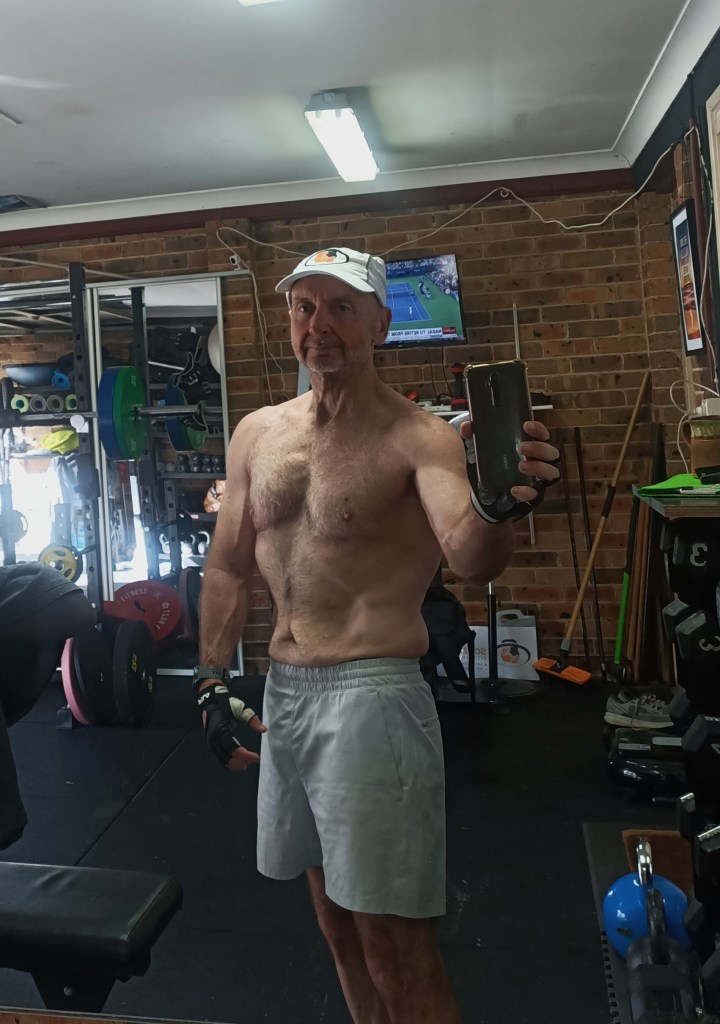
Well 7 weeks in and kind of ok. I’ve managed to drop 0.9kg’s of Body Fat which is well on track but only managed to gain about 0.2kgs of Muscle Mass (it’s so damn hard at my age ….. but Scott, what is that Arnie quote that hangs in your gym “You can have results or you can have excuses but you can’t have both”. )
Realistically, I could only rate myself a 7 out of 10 for performance so far. I have improved my diet dramatically and have no doubt increased my workout and the right stuff. But have I really kept to it and more importantly have I really pushed myself in both diet and gym effort? 7/10!
I’ll drop another post at the end that will be an honest show of results and also give more details about the routines but if you want to know more about what I’m doing or what I could do for you, get in touch. Remember, it’s never too late or more importantly, never too early to start improving your health and fitness!
How Fit Are You for Your Age? Take These Tests to Find Out!
Fitness isn’t just about how much you can lift or how fast you can run—it’s about overall strength, endurance, flexibility, and stamina. As we age, our fitness levels can change, but it’s never too late to assess where you stand and set goals for improvement. Whether you’re in your 30s, 40s, 50s, or 60s, these simple fitness tests can help you measure your current fitness and benchmark your performance against others in your age group.
Here are six tests that assess different aspects of fitness, how to perform them, and what benchmarks you should aim for based on your age and gender.
1. The Sit-Up Test
What it measures: Core strength and endurance.
How to do it:
- Lie on your back with your knees bent at 90 degrees and your feet flat on the floor.
- Cross your arms over your chest, hands on opposite shoulders.
- Have someone hold your feet or anchor them.
- Perform as many sit-ups as you can in 1 minute, lifting your upper body to your knees and then returning to the starting position.
Benchmarks: The average performance for each age group is based on how many sit-ups you can do in 1 minute.
- 30s:
- Men: 40-50
- Women: 30-40
- 40s:
- Men: 35-45
- Women: 25-35
- 50s:
- Men: 30-40
- Women: 20-30
- 60s:
- Men: 20-30
- Women: 15-25
2. The Push-Up Test
What it measures: Upper body strength, particularly chest, shoulders, and triceps.
How to do it:
- Get into a push-up position with your hands slightly wider than shoulder-width apart.
- Lower your body until your chest almost touches the floor and then push back up.
- Complete as many full push-ups as you can without rest.
Benchmarks: The number of push-ups you can do in one go gives a good indication of upper body strength for your age group.
- 30s:
- Men: 30-40
- Women: 15-20 (can modify by doing push-ups on knees)
- 40s:
- Men: 25-35
- Women: 12-18
- 50s:
- Men: 20-30
- Women: 10-15
- 60s:
- Men: 15-20
- Women: 8-12
3. The Elevator Test
What it measures: Cardiovascular endurance and leg strength.
How to do it:
- Find a set of stairs with at least 8-10 flights or simulate this on a stair machine at the gym.
- Walk or jog up the stairs as quickly as possible without stopping. Time yourself.
Benchmarks: How quickly you can ascend 10 flights of stairs is a good measure of your heart health and leg strength.
- 30s:
- Men: 40-50 seconds
- Women: 50-60 seconds
- 40s:
- Men: 45-55 seconds
- Women: 55-65 seconds
- 50s:
- Men: 50-60 seconds
- Women: 60-70 seconds
- 60s:
- Men: 55-65 seconds
- Women: 65-75 seconds
4. The Plank Test
What it measures: Core stability and endurance.
How to do it:
- Get into a forearm plank position with your body in a straight line from head to heels, elbows under your shoulders.
- Hold this position for as long as possible without letting your hips sag or rise.
Benchmarks: How long you can hold the plank measures core strength and endurance.
- 30s:
- Men: 90-120 seconds
- Women: 60-90 seconds
- 40s:
- Men: 75-100 seconds
- Women: 45-75 seconds
- 50s:
- Men: 60-90 seconds
- Women: 40-60 seconds
- 60s:
- Men: 45-60 seconds
- Women: 30-45 seconds
5. The 5km Run Test
What it measures: Cardiovascular endurance and aerobic fitness.
How to do it:
- Run (or jog/walk) 5 kilometers (3.1 miles) at your fastest sustainable pace.
- Time yourself.
Benchmarks: Your finishing time is a good indicator of endurance and aerobic capacity.
- 30s:
- Men: 25-30 minutes
- Women: 28-33 minutes
- 40s:
- Men: 27-32 minutes
- Women: 30-35 minutes
- 50s:
- Men: 28-35 minutes
- Women: 33-38 minutes
- 60s:
- Men: 30-38 minutes
- Women: 35-40 minutes
6. The 1-Mile Run Test
What it measures: Speed, cardiovascular health, and lower body endurance.
How to do it:
- Run 1 mile (1.6 kilometers) as fast as possible, maintaining a steady pace.
- Time yourself.
Benchmarks: Your 1-mile run time is a quick snapshot of your cardiovascular fitness.
- 30s:
- Men: 7-9 minutes
- Women: 8-10 minutes
- 40s:
- Men: 8-10 minutes
- Women: 9-11 minutes
- 50s:
- Men: 9-11 minutes
- Women: 10-12 minutes
- 60s:
- Men: 10-12 minutes
- Women: 11-13 minutes
Final Thoughts: How Did You Do?
These fitness tests give you a clear snapshot of your fitness level and can be a good starting point to set goals for improvement. Remember, fitness isn’t about competing with others—it’s about competing with yourself and working to be healthier than you were yesterday. Whether you’re in your 30s or 60s, the important thing is to stay active, challenge yourself, and take small steps toward better health.
How do your results compare to the benchmarks for your age? Use this as motivation to continue improving and to incorporate a balanced routine of strength training, cardiovascular workouts, and flexibility exercises. Fitness is a journey, not a destination—keep moving forward!
Isometric Exercises – The Secret Benefits of Keeping Still!
When most people think about exercising, they picture dynamic movements—lifting weights, running, or jumping. But did you know that some of the most effective exercises require you to stay completely still? Isometric exercises, which involve holding a static position for a period of time, are an underrated yet powerful way to improve your strength, endurance, and overall health. These “still” exercises can deliver some surprising benefits that you might be missing out on!
What Are Isometric Exercises?
Isometric exercises involve contracting your muscles without moving the joints. Instead of lifting, lowering, or shifting, you hold a position while your muscles work hard to maintain that position. Classic examples include:
- Planks: Holding your body in a push-up position, maintaining tension in your core.
- Wall Sits: Sitting against a wall as if you’re in an invisible chair, engaging your legs and glutes.
- Static Lunges: Holding a lunge position without moving, challenging your legs and core.
- Isometric Squats: Lowering into a squat and holding that position to engage your quadriceps and glutes.
These exercises rely on a static hold, but don’t be fooled—they can be deceptively difficult, and the benefits are immense.
The Benefits of Isometric Exercises
While they may not involve any visible movement, isometric exercises come with a range of hidden benefits that can improve your fitness and overall health. Let’s explore some of the key advantages.
1. Build Strength Without Heavy Lifting
Isometric exercises are fantastic for building muscle strength without the need for weights or excessive motion. When you hold a position, your muscles remain under constant tension, which helps increase their capacity to generate force. This is especially useful if you’re working to improve strength in specific muscle groups or if you’re recovering from an injury and want to avoid the strain of traditional weightlifting.
For example, holding a plank engages your core muscles and builds strength in your abs, shoulders, and even your lower back—all without moving a muscle! You’re essentially training your muscles to stay engaged for longer periods, building strength in a more controlled and less risky manner than dynamic exercises.
2. Improves Blood Flow and Reduces Blood Pressure
One of the lesser-known benefits of isometric exercises is their ability to improve blood flow. When you hold a static position, your muscles contract, which compresses the blood vessels, temporarily restricting blood flow. Once you release the hold, blood flow surges back into the area, flushing out waste products and bringing in oxygen and nutrients. This process helps to enhance circulation throughout the body.
But here’s the big win: isometric exercises have also been shown to have positive effects on blood pressure. Several studies have demonstrated that these exercises can lead to reductions in both systolic and diastolic blood pressure, particularly in people with hypertension. The exact mechanism isn’t fully understood, but it’s believed that the increased blood flow following isometric holds may help improve vascular health and reduce arterial stiffness.
3. Boosts Endurance
Endurance is typically associated with long-duration, repetitive movements like running or cycling. However, isometric exercises also help improve muscular endurance by training your muscles to sustain tension over time.
When you hold a position like a plank or a wall sit, your muscles must work continuously to maintain that position, leading to improvements in their ability to endure stress. Over time, this increases your stamina, making it easier to handle long or intense workouts. Plus, boosting your muscle endurance helps with daily activities, improving your posture, balance, and ability to resist fatigue.
4. Weight Loss and Fat Burning
While isometric exercises might seem like a “static” workout, they can actually contribute to weight loss and fat burning. Holding a position requires a lot of muscular effort, and this effort uses energy—meaning you burn calories even while staying still.
Additionally, building muscle through isometric exercises increases your resting metabolic rate, meaning your body burns more calories throughout the day, even when you’re not working out. This makes isometrics a great tool for those looking to lose weight or tone their bodies without needing to resort to high-impact exercises that can be hard on the joints.
5. Joint and Injury Protection
Because isometric exercises don’t involve repetitive movement or impact, they are much gentler on your joints compared to traditional exercises like running, jumping, or weightlifting. This makes them an excellent option for people recovering from injury, those with joint pain, or anyone looking for a low-impact way to stay active.
Isometric exercises allow you to strengthen your muscles around the joints without placing stress on the joints themselves. By improving the strength of the supporting muscles, you also reduce the likelihood of future injuries.
How to Incorporate Isometric Exercises into Your Routine
The beauty of isometric exercises is that they can be done almost anywhere and require little to no equipment. Here are a few tips on how to get started:
- Start Simple: Begin with basic holds like planks, wall sits, or static lunges. Aim to hold each position for 20 to 30 seconds, then gradually increase the duration as you get stronger.
- Mix It Up: Isometrics can complement your regular workouts. Try adding a plank at the end of your workout to challenge your core, or add isometric holds to your weightlifting routine for an extra burn.
- Focus on Breathing: It’s common to hold your breath during isometric exercises, but this can lead to dizziness or unnecessary strain. Instead, focus on deep, steady breathing while you hold your positions.
- Challenge Yourself: Once you’re comfortable with basic exercises, try more advanced isometric holds or experiment with different muscle groups. For example, try holding a push-up at the lowest position, or do a squat hold with added weights.
Final Thoughts: The Power of Staying Still
Isometric exercises might seem simple, but don’t let that fool you—they offer a host of benefits, from building strength and endurance to improving circulation and aiding weight loss. Whether you’re short on time, recovering from an injury, or looking for a low-impact way to improve your fitness, isometrics can be the secret weapon in your exercise arsenal.
So next time you’re planning a workout, remember that sometimes, the best thing you can do for your body is to hold still—your muscles (and your health) will thank you for it!
Are You Eating Enough Protein?
Protein is one of the most important nutrients your body needs to function, and yet many of us don’t get enough of it. Whether you’re looking to lose weight, build muscle, or simply stay healthy as you age, ensuring that you’re eating enough protein is key. But how much is “enough,” and what happens when you fall short? Let’s dive into the importance of protein and why you should prioritize it in your diet.
Why Protein Matters
Protein is the building block of every cell in your body. It’s essential for maintaining muscle mass, supporting your immune system, producing enzymes and hormones, and helping you recover after exercise. It’s also one of the most satiating macronutrients, meaning it keeps you feeling full longer—an important factor if you’re trying to manage your weight.
Without enough protein, your body can’t repair tissues, recover from workouts, or even support basic metabolic functions. If you’ve been feeling sluggish, losing muscle mass, or struggling to make fitness gains, it might be due to a lack of protein in your diet.
The Protein Formula: How Much Do You Really Need?
Scientists recommend that the average 19-year-old consumes about 0.8 grams of protein per kilogram of body weight. So, if you weigh 70 kg (around 154 lbs), that would equate to about 56 grams of protein per day. While this is a general guideline for most people, it doesn’t take into account various factors such as your activity level, age, or fitness goals.
If you’re looking to lose weight, build muscle, or are edging into your late thirties or older, your protein needs should be higher. Experts recommend 1.0 to 1.3 grams of protein per kilogram of body weight for those who fit into this category. For instance, if you’re 70 kg and aiming to build muscle, you should aim for about 70-91 grams of protein daily to meet your body’s needs.
What Happens When You Don’t Eat Enough Protein?
Failing to eat enough protein has several downsides:
- Muscle Loss: If your body isn’t getting enough protein from your diet, it will start breaking down muscle tissue to meet its protein needs. Over time, this can lead to muscle atrophy, which not only affects your strength and fitness but also reduces your metabolism.
- Slower Recovery: Protein is essential for repairing and building muscle tissue, especially after exercise. If you’re working out but not fueling your body with enough protein, you’re shortchanging your recovery and your gains.
- Increased Hunger: Protein is the most filling macronutrient, so not getting enough can leave you feeling hungry more often, making it harder to stick to a healthy eating plan—especially if you’re trying to lose weight.
- Weakened Immune System: Protein is crucial for the production of immune cells. A diet low in protein can weaken your immune response, making you more susceptible to illness.
- Fatigue and Weakness: Low protein intake can result in fatigue, reduced stamina, and general feelings of weakness. Your body simply doesn’t have the fuel it needs to keep you going strong.
The Benefits of a Protein-Rich Diet
When you hit your protein goals, the benefits go beyond just building muscle:
- Better Muscle Tone: Protein helps you retain and build muscle, which not only improves your strength but also boosts your metabolism, allowing you to burn more calories at rest.
- Weight Management: Higher protein intake can aid in weight loss by helping you feel fuller longer and reducing cravings. It also ensures that when you lose weight, you’re losing fat—not muscle.
- Healthy Aging: As you age, you naturally lose muscle mass, a condition called sarcopenia. Increasing your protein intake, particularly as you enter your 40’s and beyond, can help slow this process and keep you strong and active.
- Improved Bone Health: Studies show that diets high in protein can improve bone density and reduce the risk of osteoporosis, especially in older adults.
The Best Sources of Protein
To ensure you’re getting a full range of essential amino acids (the building blocks of protein), it’s important to include a variety of protein sources in your diet.
- Animal-Based Proteins: Meat, poultry, fish, and eggs provide complete proteins, meaning they contain all nine essential amino acids that your body can’t produce on its own. Red meats like beef and lamb are excellent sources of high-quality protein, but they can also be high in fat, so balance them with leaner cuts like chicken or turkey.
- Plant-Based Proteins: Fresh plant-based proteins like lentils, beans, chickpeas, quinoa, and tofu are great alternatives to meat. While they don’t always provide a full range of essential amino acids on their own, you can easily combine different plant-based sources (e.g., rice and beans) to meet your protein needs.
- Dairy Products: Dairy foods like Greek yogurt, cottage cheese, and milk are high in protein and also offer other benefits, such as calcium and vitamin D. They’re excellent for supporting muscle repair and recovery.
- Whey Protein Supplements: If you’re struggling to get enough protein from whole foods, whey protein supplements are a convenient and low-fat option. Whey protein is a complete protein and is quickly absorbed by the body, making it perfect for post-workout recovery or as a quick snack. Plus, it’s a great way to boost your intake without needing to eat slabs of beef or lamb.
Final Thoughts: Prioritize Protein in Your Diet
In summary, protein isn’t just for bodybuilders—it’s an essential nutrient for everyone. Whether you’re trying to lose weight, build muscle, or age healthily, ensuring you’re eating enough protein is crucial. The general guideline of 0.8 grams per kilogram of body weight is a good starting point, but if you’re more active, aiming for fat loss, or over 30, you should increase that to 1.0-1.3 grams per kilogram.
By incorporating a variety of protein sources—from lean meats to plant-based options and whey supplements—you can ensure that you’re giving your body what it needs to function at its best. So, next time you sit down to plan your meals, ask yourself: Are you eating enough protein? Your body will thank you for it!
Why push yourself in your weight session?
How to get maximum muscle strengths, gains and definition out of your weight training


When it comes to building strength, toning your body, and pushing past your fitness limits, there’s one thing you must remember: not all muscle fibers are created equal. Your muscles are made up of various types of fibers, and understanding how to engage each one can transform the way you approach your workouts.
I like to think of these fibers as belonging to three different “groups,” each of which plays a specific role in helping you conquer your goals. Let’s break them down into what I call the Green Group, Yellow Group, and Red Group. Each has a unique purpose, and knowing how to engage them all is why pushing yourself at the gym is so critical.
The Green Group: Your Endurance Foundation
The Green Group of muscle fibers is the first line of defense. These fibers are utilized when you lift lighter weights, ones that you can handle for more than 15 reps. Think of them as your endurance muscles. They’re primarily built for stamina and can keep you going during activities like long runs, swimming, or cycling, and, of course, light-weight strength training.
In the gym, when you grab that lighter dumbbell and bang out 20 reps, your Green Group is hard at work. However, here’s the catch: while these fibers help you build muscular endurance, they won’t give you the definition or raw strength that many of us are looking for. To do that, you need to activate more than just this group. And that’s why pushing yourself is key!
The Yellow Group: Enter the Strength Zone
Once the Green Group starts to tire out, your body will call in reinforcements—the Yellow Group. These muscle fibers activate when you challenge yourself with medium weights, those that you can lift for about 10 to 15 reps. This group is essential for both strength and muscle growth.
When you’re lifting in this rep range, you’re not just building endurance anymore—you’re promoting hypertrophy (muscle growth) by breaking down muscle fibers, which will repair and come back stronger. This group will help you shape your body and increase functional strength, but just like the Green Group, they too have a limit.
If your goal is to build serious muscle and strength, this is the point where you need to push beyond your comfort zone and recruit the Red Group.
The Red Group: Tapping Into Maximal Strength
The Red Group of muscle fibers is where the magic really happens. These fibers are only activated when the Green and Yellow Groups can no longer handle the load—when you lift heavy weights that you can only manage for 6 to 10 reps. This is the group responsible for building serious muscle mass and explosive strength.
The Red Group muscle fibers are typically larger, more powerful, and designed to be called upon only during high-intensity efforts. These fibers will not get activated unless you’re really pushing your limits in the gym. When you squat those heavy weights or attempt a deadlift with a challenging load, your Red Group steps in and helps you complete those difficult reps.
Engaging these muscle fibers not only increases your overall strength but also boosts your metabolism, improves bone density, and makes you more resilient in your everyday life. But here’s the thing—these fibers will remain dormant if you don’t challenge yourself with progressively heavier weights. If you stop at the Green and Yellow Groups, your gains will plateau.
Why You Need to Push Through to the Red Zone

If you’re serious about getting stronger, leaner, and fitter, activating the Red Group is non-negotiable. Here’s why you must push yourself at the gym to unlock the potential of your muscle fibers:
- Avoiding Plateaus: Staying within your comfort zone with light or medium weights will only get you so far. To break past plateaus, you need to challenge your muscles enough to force the Red Group to take over.
- Maximizing Gains: Engaging all three fiber groups means you’re working your muscles to their full capacity. The Green Group builds endurance, the Yellow Group promotes growth, and the Red Group builds raw strength. To fully transform your body, you need to hit all three.
- Boosting Metabolism: Heavy weightlifting activates more muscle fibers, which burns more calories, even at rest. The more muscle you build, the higher your resting metabolic rate, helping you burn fat and stay lean.
- Building Resilience: Engaging your Red Group helps build functional strength that translates into everyday life. Whether it’s lifting heavy objects, improving posture, or reducing injury risk, pushing yourself with heavier weights strengthens not only your muscles but also your joints and bones.
Final Thoughts: Push Past the Comfort Zone
In summary, if you’re only lifting weights that engage your Green Group, you’re leaving a lot of potential on the table. Sure, you’ll build endurance, but to really transform your physique and maximize your strength, you need to challenge your muscles enough to activate all three groups. The Green, Yellow, and Red Groups each play an essential role, but only when you push past your limits can you fully tap into the power of your Red Group and unleash your true strength potential.
So, next time you hit the gym, don’t be afraid to pick up those heavier weights. Your muscles are stronger than you think, and pushing yourself past what feels comfortable is the key to unlocking real, sustainable results.
Remember: if it doesn’t challenge you, it won’t change you!
 scozafitness.com